
Information
- Call Us: +91 70014 42369
- Email: [email protected]
- Address: Defence Colony, Bagdogra, Dist- Darjeeling, India – 734014
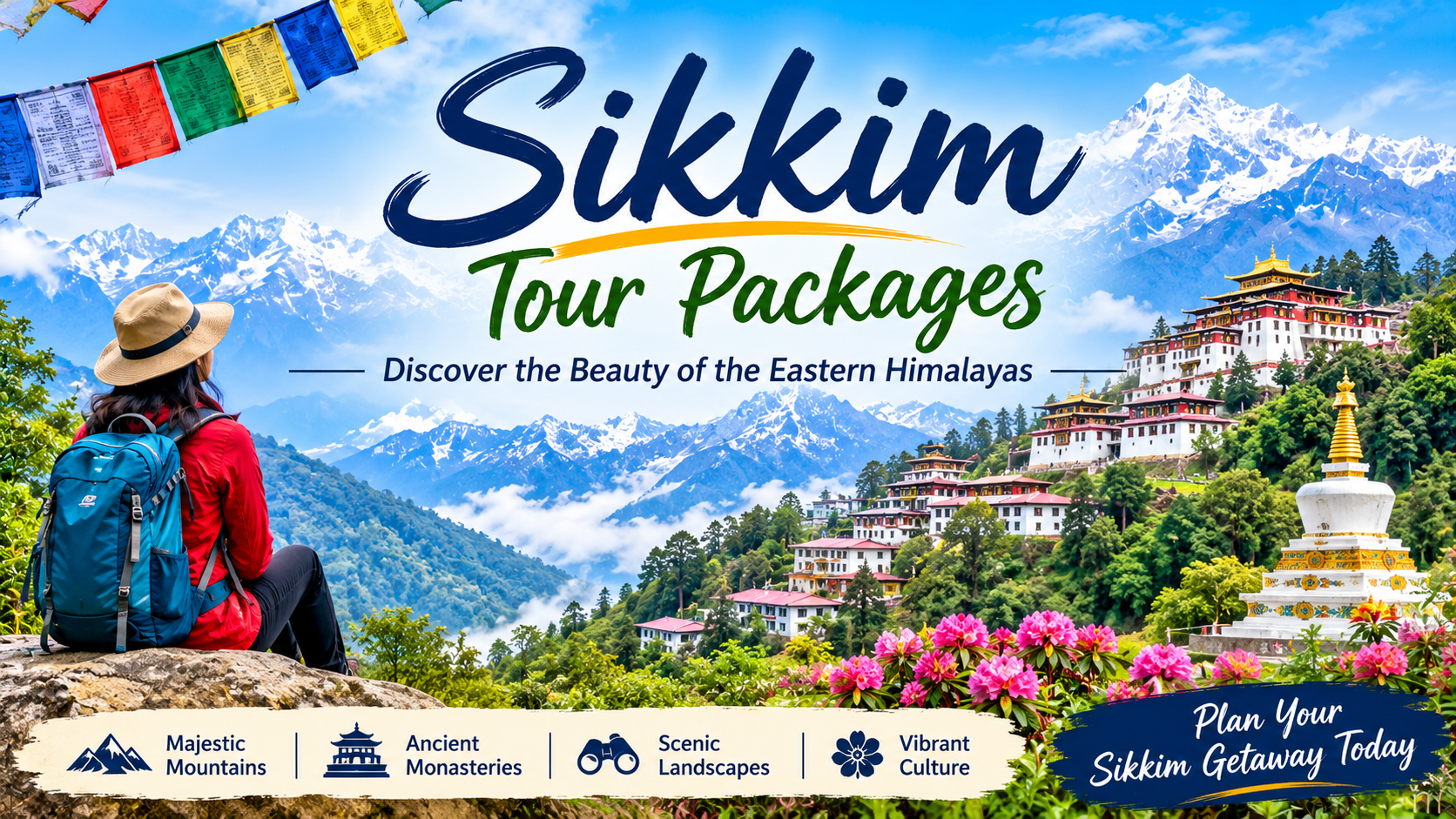
Tucked between Nepal, Bhutan, Tibet and West Bengal, Sikkim is one of India's smallest states, yet it holds more scenery than regions many times its size. Snow peaks, rhododendron forests, glacial lakes, ancient monasteries and warm mountain hospitality all come together here. If you are planning a Himalayan holiday, the right Sikkim tour packages let you cover the highlights without the stress of arranging permits, vehicles and hotels on your own.
At Destinasia, we design our Sikkim itineraries around how travellers actually want to experience the mountains: unhurried, comfortable and well informed. This guide walks through the best places to visit, the right time to go and the practical details that make a trip smooth, so you can choose a plan with confidence.
Sikkim is home to Kanchenjunga, the world's third-highest mountain at 8,586 metres. On a clear morning its snowy ridges glow gold above the clouds, a sight many travellers remember for years.
It is also one of India's cleanest and most environmentally conscious states, and the first to go fully organic. Villages keep their hillsides forested, plastic bags are discouraged and the air feels noticeably fresh.
Culture adds another layer. Buddhist, Nepali and Lepcha traditions sit side by side here, which shows in the festivals, the food and the prayer flags fluttering over almost every ridge. You can eat steaming momos at a roadside stall in the morning, spin prayer wheels at a monastery by noon and watch the sunset over terraced hills in the evening. The result is a destination that feels peaceful, welcoming and distinctly different from the plains.
Most journeys begin in Gangtok, the state capital, which sits at about 5,400 feet and serves as the base for the eastern circuit. Spend an evening on MG Marg, a pedestrian-only promenade lined with cafés and shops, where locals and visitors stroll together after dark. Visit Rumtek Monastery, one of the most important Buddhist centres in the region, and ride the ropeway for sweeping views over the valley.
Day trips lead to Tsomgo (Changu) Lake, a high-altitude lake at about 12,400 feet that changes colour with the seasons, frozen white in winter and deep blue in summer. Excursions towards Nathula Pass need a permit and are open to Indian nationals only, so your operator should arrange the paperwork in advance. Allow a full day for these trips, since the roads are winding and the weather can change quickly.
In West Sikkim, Pelling is where Kanchenjunga feels closest. Pemayangtse Monastery, one of the state's oldest, sits on a hilltop with commanding views. Nearby you can visit Khecheopalri Lake, sacred to locals, and walk the Pelling Skywalk, which leads to a towering statue of Chenrezig.
The pace here is slower than in Gangtok, which is exactly the appeal. Mornings start with a mountain view from your window, afternoons are for short walks and monastery visits, and evenings are quiet. If you want to combine both worlds, our Gangtok Pelling tour package pairs the cultural energy of the capital with the calm of the west. It suits couples, families and first-time visitors who want variety without long, tiring transfers.
North Sikkim is where the landscape turns dramatic. The road climbs past waterfalls and river gorges to Lachung and Lachen, two mountain villages that serve as bases for the region's biggest sights:
North Sikkim is a protected area, so permits are required, and roads can be challenging in bad weather. Altitude is also a real factor, with Gurudongmar sitting above 5,000 metres, so a gradual climb matters. That is why an organised North Sikkim tour package makes sense: experienced drivers, arranged permits and planned acclimatisation make the journey safer and far more enjoyable.
Not every highlight sits in the north or west. South Sikkim is an easy, rewarding add-on. Ravangla is known for its Buddha Park, where a large seated Buddha statue looks out over the hills, and for quiet walks through forests and tea gardens. Namchi, nearby, is famous for its hilltop religious complexes and sweeping views across the valleys. Both towns are less crowded than the main circuits, which makes them ideal for a calm day between longer drives.
With a little more time, a week is the ideal length for seeing Sikkim properly. You can combine the eastern and western circuits, add a rest day for acclimatisation and still visit places like Ravangla and Namchi without rushing.
Our Sikkim 7 days tour package is built around this pace. It balances sightseeing with downtime, so you come home with memories rather than exhaustion. It works well for families and groups who want a well-rounded introduction to the state, and it leaves room to adjust the plan if the weather changes.
Sikkim rewards travellers in every season, but timing shapes what you see:
Not sure which season suits you? Share your dates with our team and we will match them to the right itinerary.
For official updates on permits, festivals and advisories, the Sikkim Tourism Department is a reliable reference.
Sikkim pairs well with the rest of the region. If you want to extend your trip, read our guide to Northeast India tour packages, which covers Meghalaya, Assam and Arunachal Pradesh and shows how easily several states can be combined into one itinerary. Many travellers fly into Bagdogra, spend a week in Sikkim and then continue to Darjeeling or further east.
Choosing a trip comes down to how much time you have, how adventurous you feel and what you want to see: monasteries and city life, the calm of Pelling or the high-altitude drama of the north.
Our team handles the details, from permits and transfers to hotels and local guides, so you can focus on the mountains. Explore our Sikkim tour packages or get in touch to customise a trip around your dates and budget. The Eastern Himalayas are waiting.
March to May and October to December are the most popular windows, with clear mountain views and comfortable weather. Winter suits snow lovers, while the monsoon months need extra flexibility because of rain and landslides.
Five to seven days works well for most travellers. A week lets you cover Gangtok, Pelling and a day or two of South Sikkim at a relaxed pace. North Sikkim usually needs additional days.
Yes. North Sikkim and areas such as Nathula Pass need special permits. Booking through a tour operator is the easiest route, since they arrange the paperwork. Rules differ for foreign nationals, so confirm the requirements when you book.
Yes, especially on the Gangtok and Pelling circuit, where the driving distances are shorter and altitudes are moderate. Higher destinations like Gurudongmar Lake can cause altitude discomfort, so older travellers and young children should check with a doctor first and build in rest days.
Pack warm layers, a waterproof jacket, comfortable walking shoes, sunscreen and any regular medicines. Carry some cash and a power bank as well, since connectivity and ATMs can be limited in remote areas.